What is
reverse coloring?
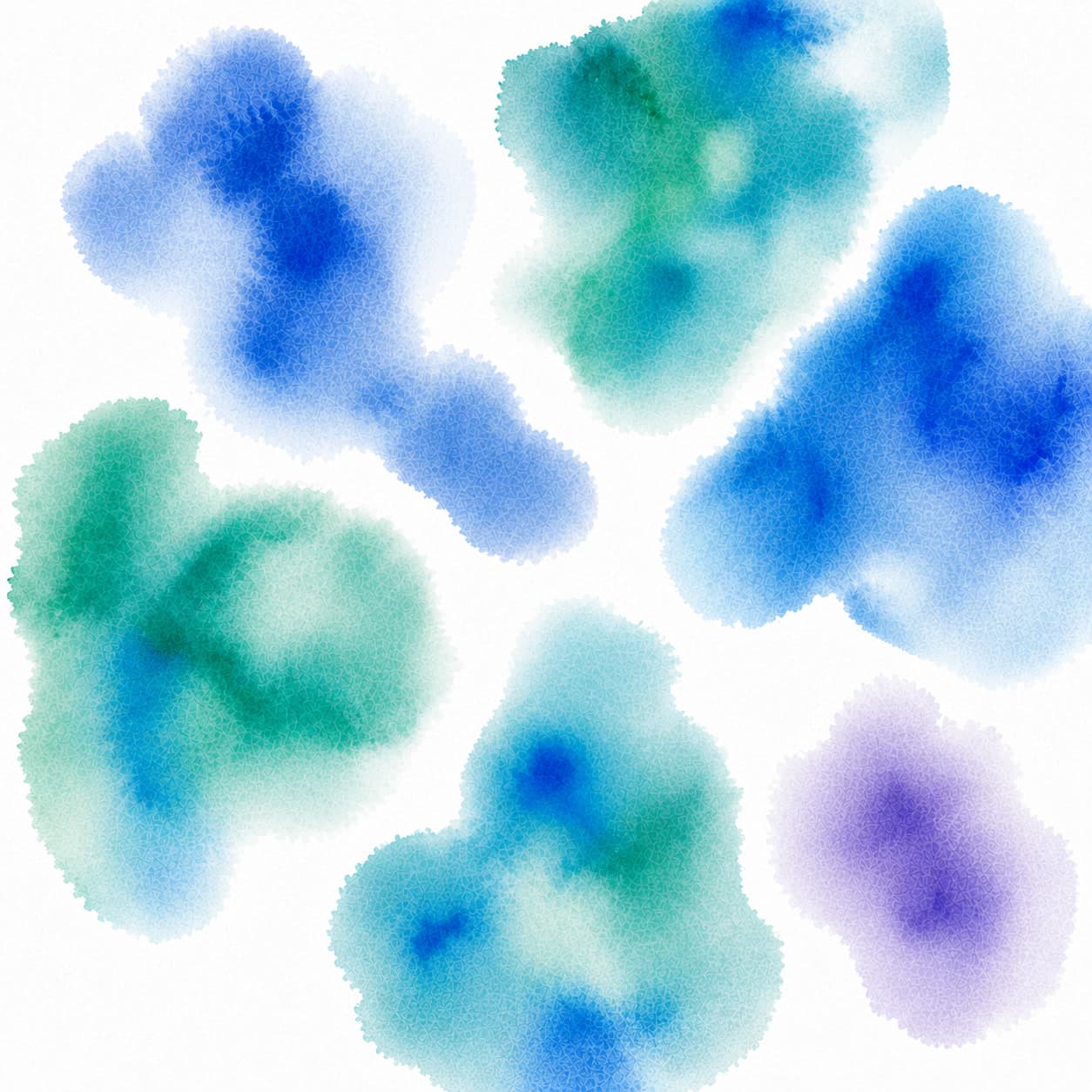
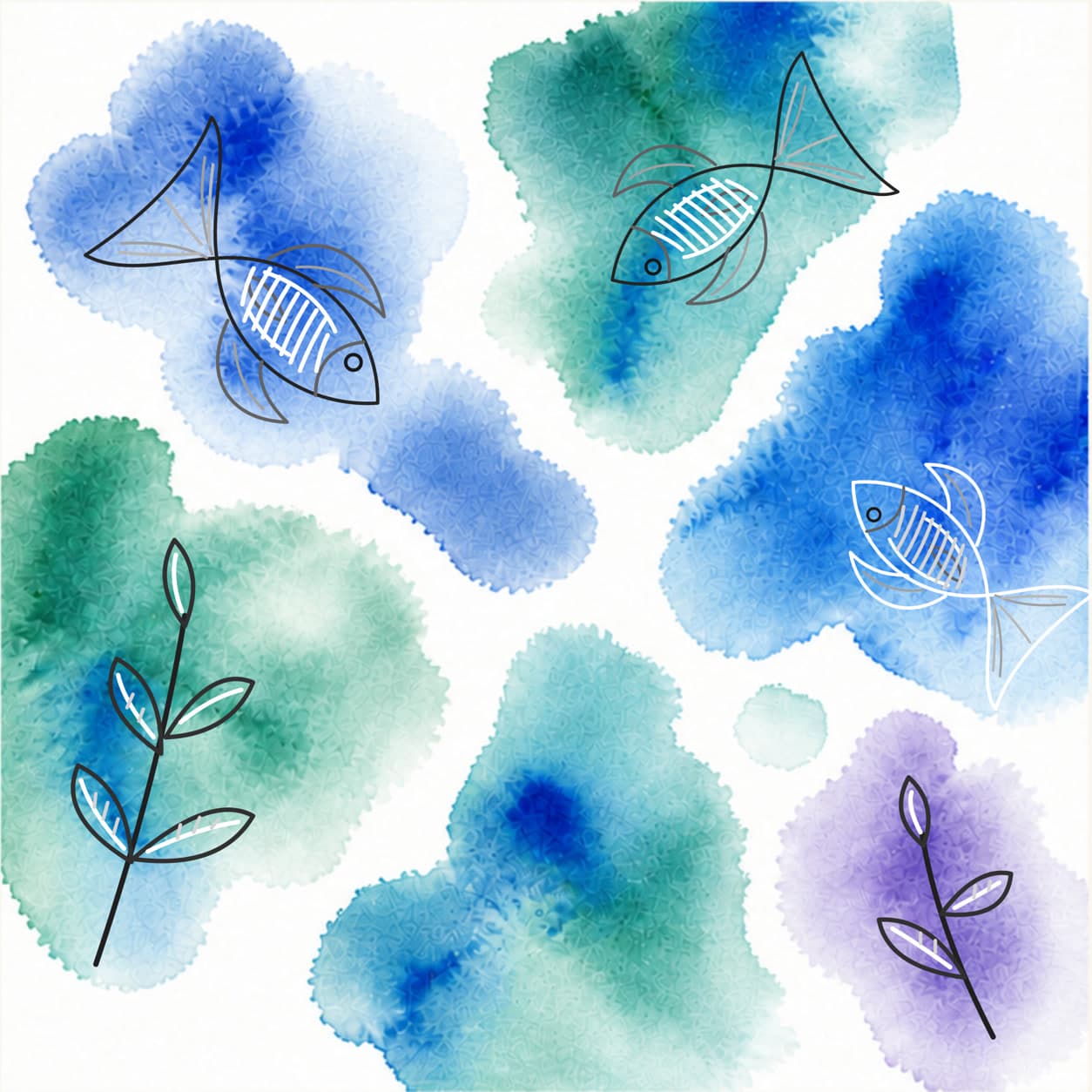
A coloring book turned inside out. The page starts as loose watercolor with no outlines, and you draw the lines: the fish, the leaf or the face you see in the color.
Coloring, turned around
In a coloring book the drawing is done for you. Someone else has decided that the page is a fox or a flower, printed the outlines, and left you to fill them in.
Reverse coloring swaps the order. The color is already on the page, painted loosely and without edges to follow, and the drawing is yours to add. The question changes from “which color goes here?” to “what is this?” A blue wash with a pointed end might be a fish. A green one with a ragged edge might be a bush, a cloud or a sleeping dog. Nobody has decided yet, and there is no wrong answer.
| Coloring book | Reverse coloring | |
|---|---|---|
| What comes first | Printed outlines | Loose color, no outlines |
| What you add | Color, inside the lines | Lines, wherever you see something |
| Who decides the picture | The illustrator | You |
| What you need | Colored pencils, markers or paint | A pen or a pencil |
| A mistake looks like | Going over a line | There is no line to go over |
Where the idea comes from
Reverse coloring comes from paper, from books where the watercolor is printed first and readers draw the outlines. One of them, The Reverse Coloring Book™ by the artist Kendra Norton, was published by Workman in August 2021. Its publisher puts the idea in one line: “The book has the colors, you draw the lines.” The series has since grown with volumes such as Through the Seasons and Mindful Journeys.
Color Before the Lines comes from those books and takes the idea to a screen. The watercolors are in the app, and you draw on them with your finger on iPhone, or with your finger or Apple Pencil on iPad.
One shape, many readings
Here is the sheet from the top of this page, up close. The washes were all painted the same loose way, but they did not become the same thing. Three became fish, each facing its own way, two became stems, and a few were left alone.
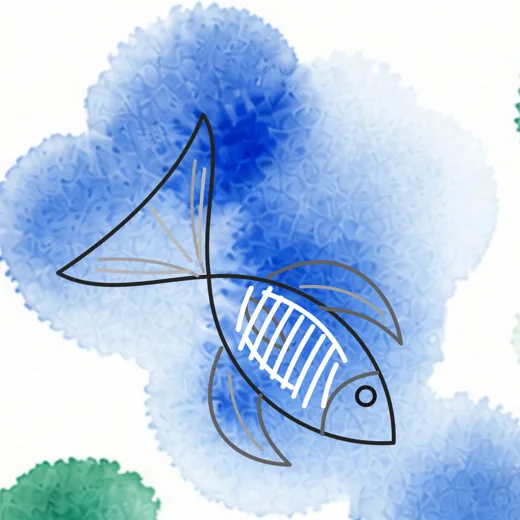
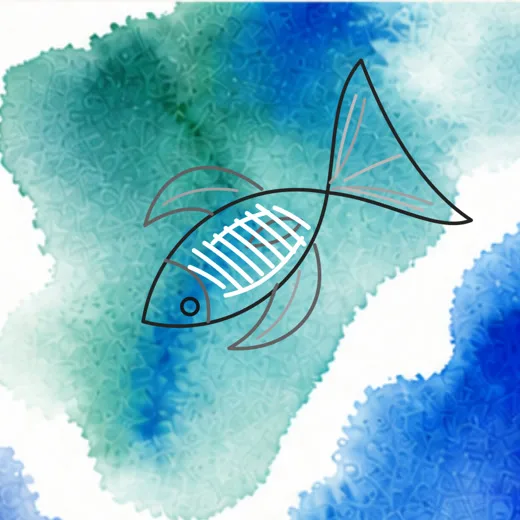
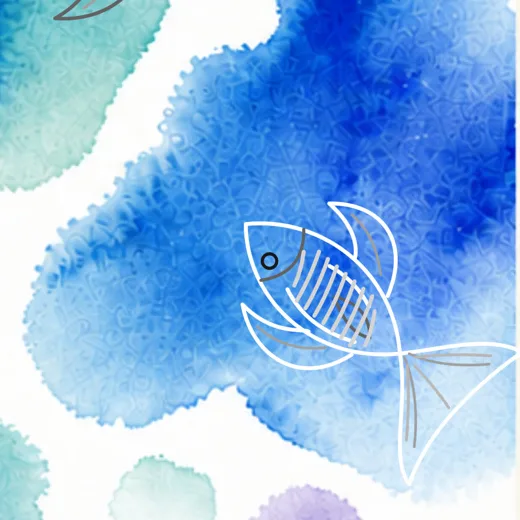
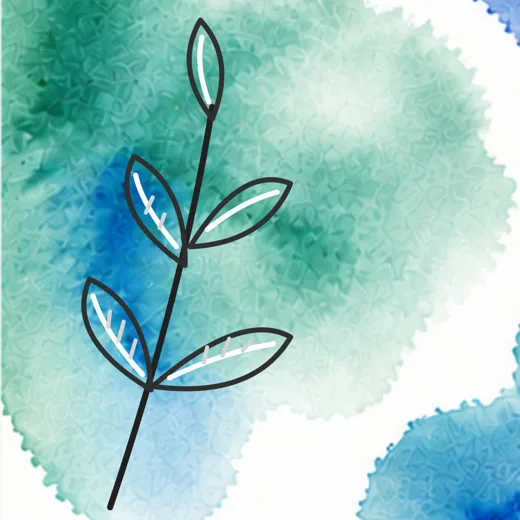
Notice what the lines leave out. They never fill a shape and rarely trace its whole edge. A few marks decide what each wash is, and the watercolor does the rest.
How to look at a shape
- Follow the edge. A point can be a nose, a beak or a tail. A ragged side can be fur, leaves or a wave.
- Find the darkest pool. Where the paint gathered, try an eye, the middle of a flower or a shadow.
- Use the white too. The paper between washes can be a gap, a highlight or the sky around a bird.
- Turn it around. On paper, rotate the page. A fish on its side can turn into a bird, a cloud upside down into a hill.
How to start
You need some color and something to draw with. The rest is looking.
- Find some color. A reverse coloring book, an app, or your own washes: wet a sheet of watercolor paper, drop in two or three colors, and let them spread and dry without a plan.
- Look before you draw. Give the page a minute. Pick the one shape that already looks like something to you.
- Make one small mark. An eye, a fin, a stem. Once one detail is down, the rest of the shape is easier to read.
- Draw lines, not fills. Outlines, veins, scales, hatching, dots. Let the watercolor stay the color.
- Match the ink to the wash. Dark lines show on pale color. On deep color, try white or light gray; on paper, a white gel pen does the same job.
- Leave some shapes alone. Not every wash needs a drawing. A few untouched shapes give the drawn ones room.
Loose lines are fine
Nobody is checking for neat lines. In this timelapse a friend draws on a long red and orange wash: quick loops turn it into a fish, then the small green strokes above it are circled into leaves.
Second thoughts and overlapping lines stay in. They are part of the drawing, not mistakes to hide.
Has it been studied?
Not on its own, not yet. Reverse coloring joins two older activities that researchers have looked at: coloring, and drawing whatever you like. What the research says sums up those studies, how small they were, and where their results disagree.
None of them tested reverse coloring or this app. Color Before the Lines is a creative app, not a treatment.